Resources

Guides, checklists and plain answers about buying, mitigating, and maintaining homes in Northern Michigan. 

Guides, checklists and plain answers for Northern Michigan homes.

Checklists and guides, free to download.

Eleven documents written from what we actually find in Northern Michigan homes. No form, no email address, no wait.

Eleven free guides from what we find in local homes. No form, no wait.

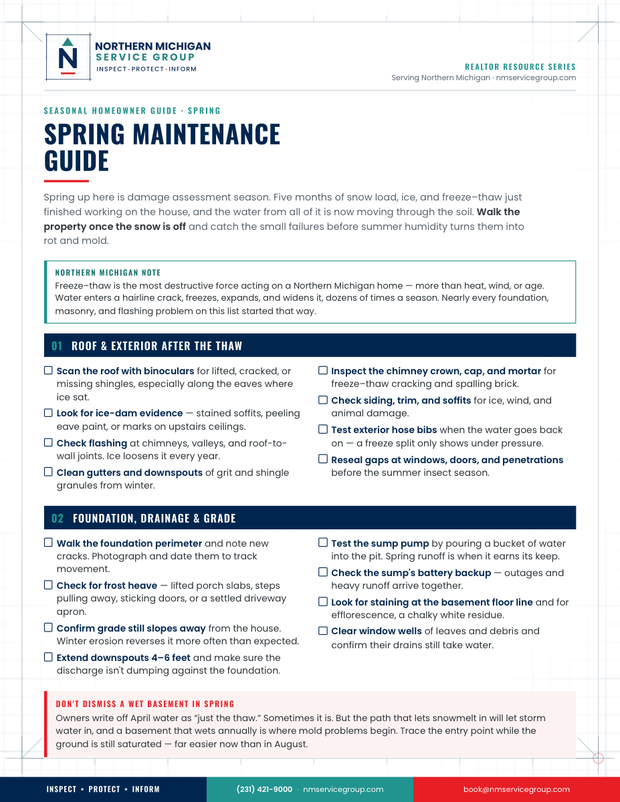
SPRING

Spring
Maintenance Guide

Post-thaw damage assessment: ice dam evidence, frost heave, drainage, and well and septic after runoff.

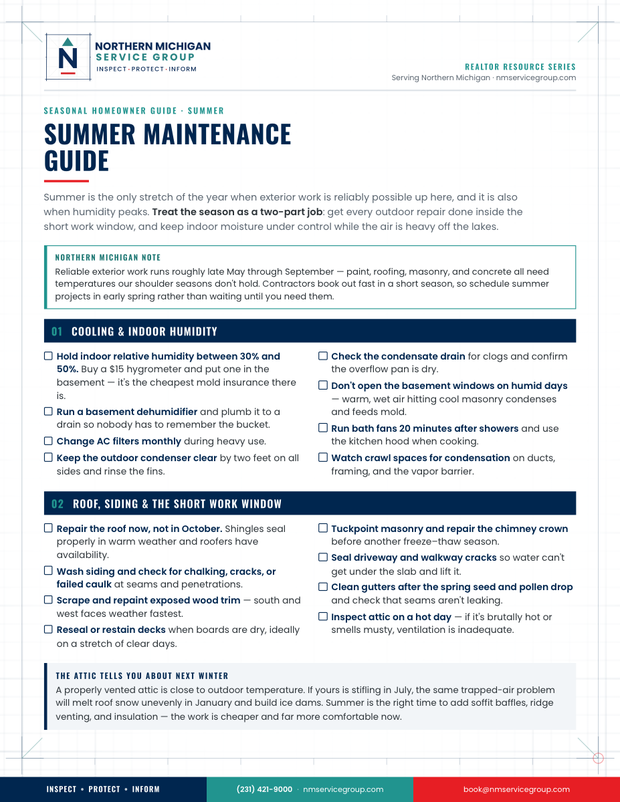
SUMMER

Summer
Maintenance Guide

Humidity control, the short exterior work window, well and septic under peak load, docks and shoreline.

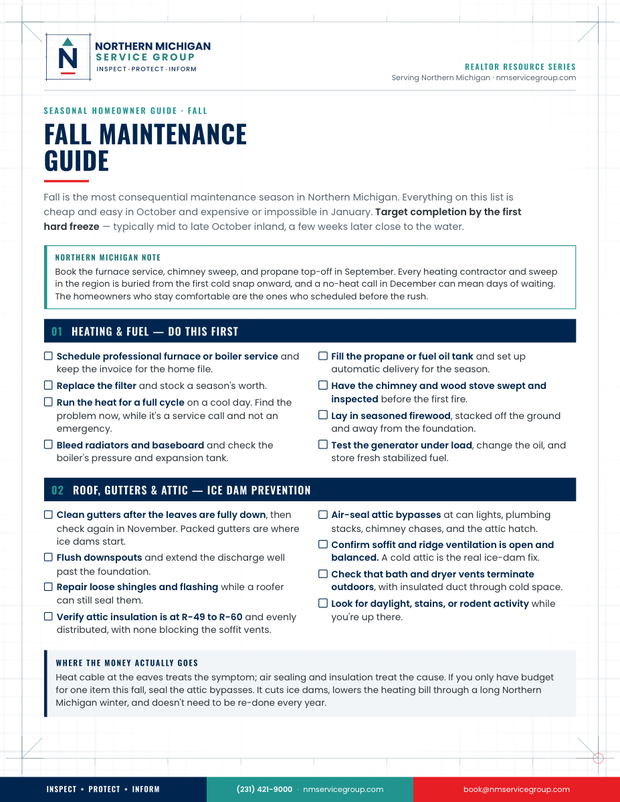
FALL

Fall
Maintenance Guide

Covers heating and fuel, ice dam prevention, winterization, and closing a seasonal property.

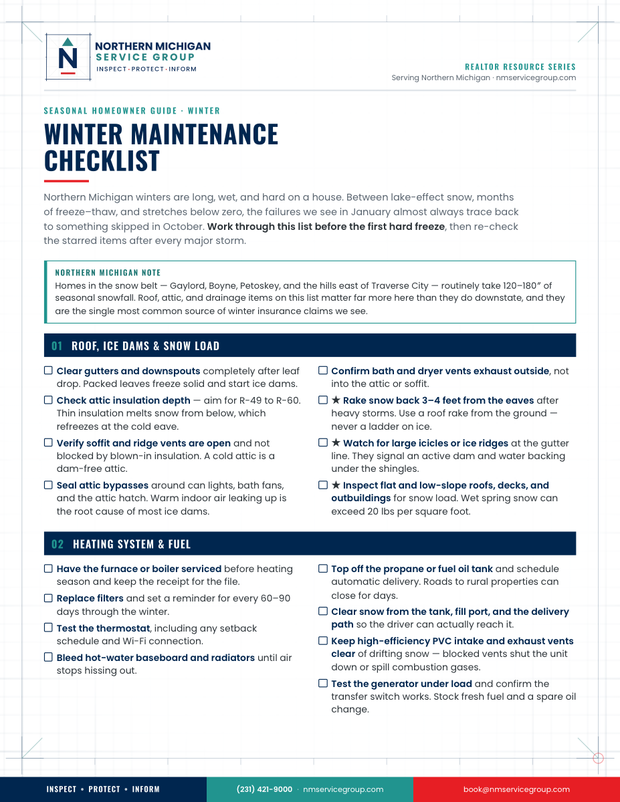
WINTER

Winter
Maintenance Checklist

Snow load, frozen pipes, and vacant home care, plus a one-page winter emergency quick reference.

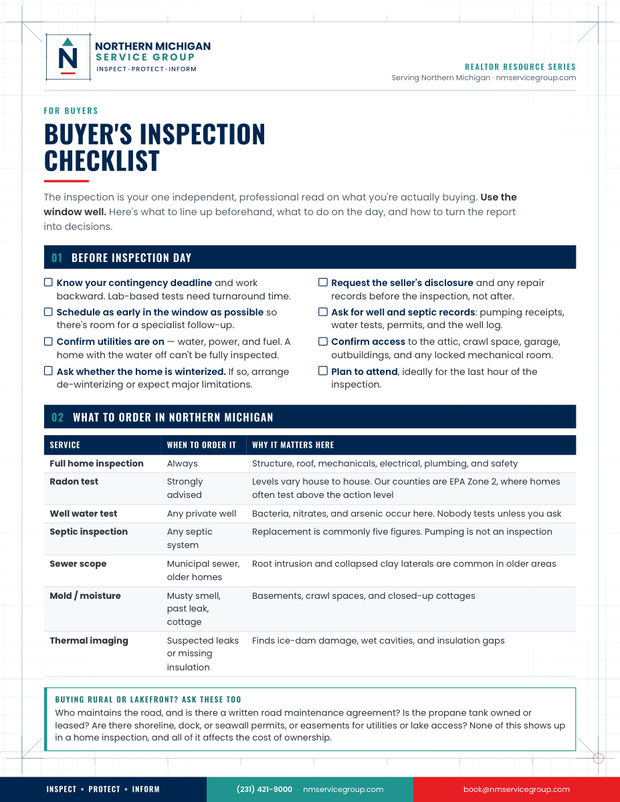
FOR BUYERS

Buyer’s Inspection Checklist

What to line up before inspection day, what to ask on site, and how to sort findings by what matters.

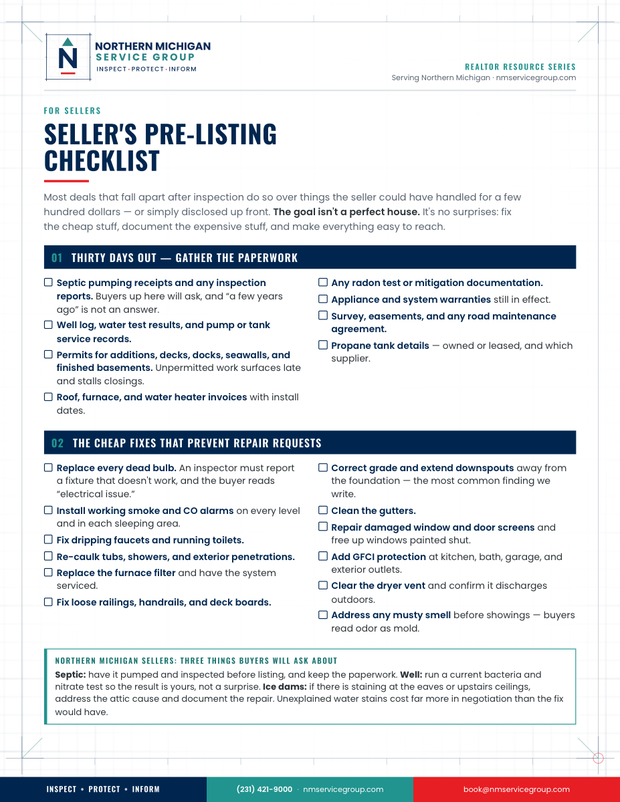
FOR SELLERS

Seller’s Pre-Listing Checklist

The cheap fixes that prevent repair requests, and other items that could cause delays.

MOLD

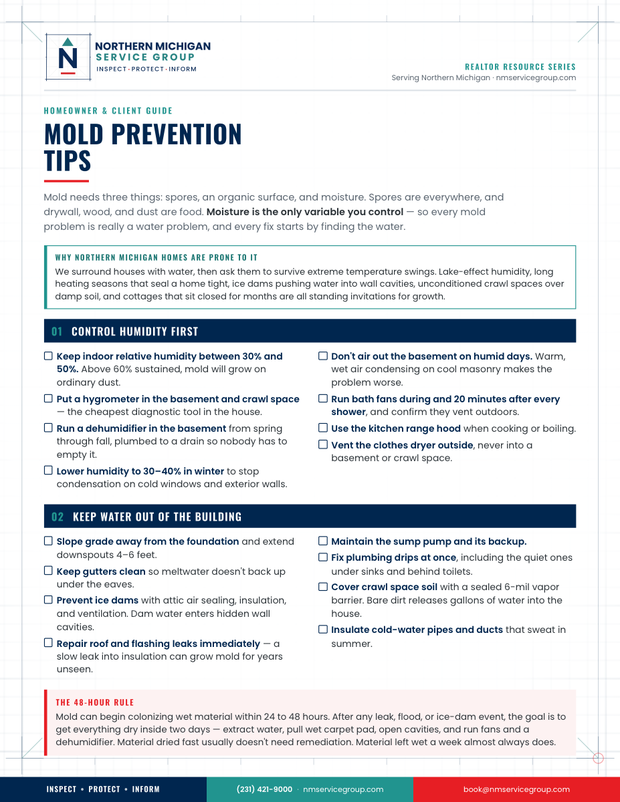
Mold Prevention Tips

Humidity targets, where mold starts in homes, and when to stop cleaning and call someone.

MOLD REPORTS

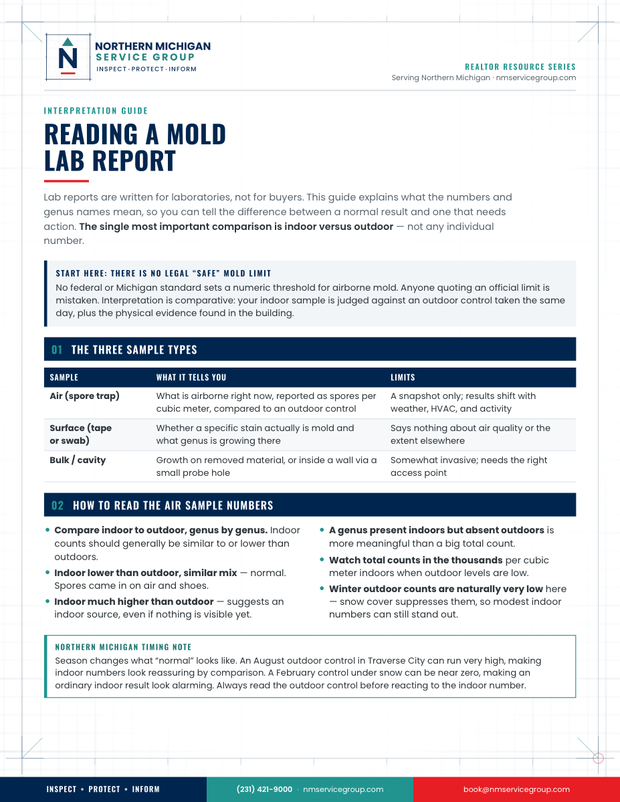
Reading a Mold Lab Report

What spore counts and genus names mean, and why indoor versus outdoor comparison matters.

CHEAT SHEET

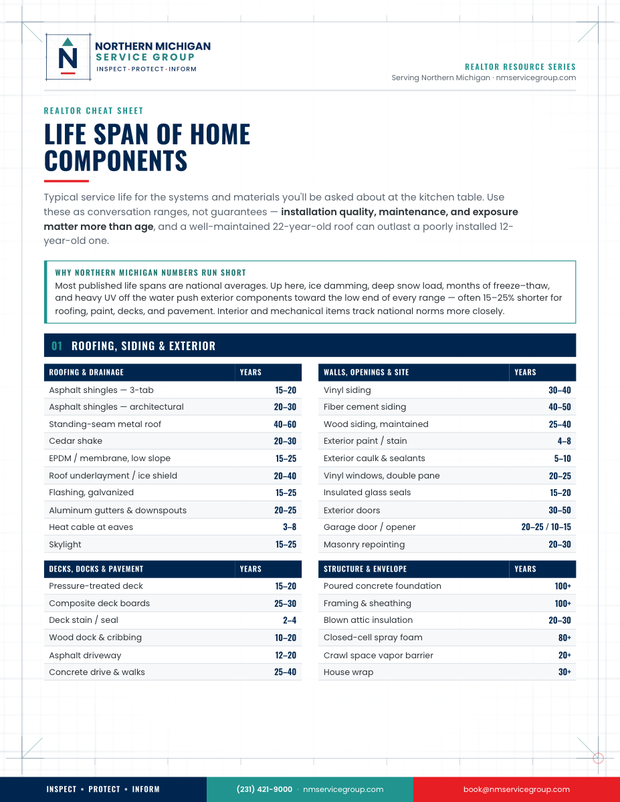
Life Span of Home Components

Service life for roofing, mechanicals, plumbing, well and septic, and what our climate does to them.

WORKSHEET

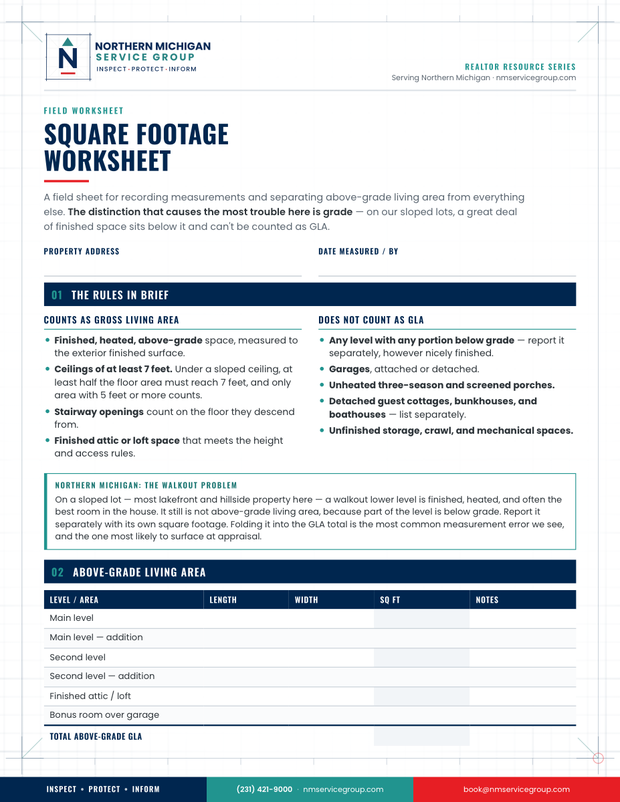
Square Footage Worksheet

Field sheet for recording all pivotal measurements within and around your property.

REFERENCE

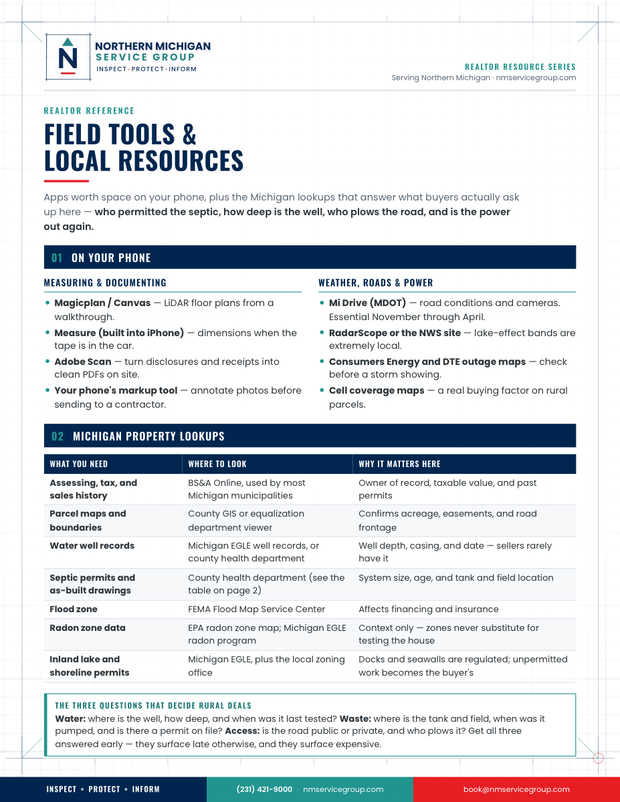
Field Tools and Local Resources

Michigan property lookups, county health department data and everything your property needs.

FAQs

The EPA recommends testing every two years, and again after any major renovation, foundation work, or change to your heating and ventilation system, all of which change how air moves through the house. If you have an existing mitigation system, test it every two years to confirm it is still performing.

Three things, in order. Keep water moving away from the foundation with gutters, downspout extensions and grading. Keep the attic cold and ventilated so ice dams do not form. And keep the crawlspace dry, with a properly sealed vapor barrier. Almost every expensive structural problem we find in Northern Michigan traces back to one of those three.

In this market, usually yes. It lets you fix or price the problems on your own schedule instead of renegotiating under a contingency deadline, and it removes the buyer’s single biggest source of leverage. It also stops the deal-killing surprise—the finding nobody saw coming three days before closing.

Yes, and ideally three: pre-drywall, final walkthrough, and an 11-month warranty inspection just before your builder’s warranty expires. Municipal code inspections confirm minimum compliance. They are not a quality review, and they do not represent your interests.

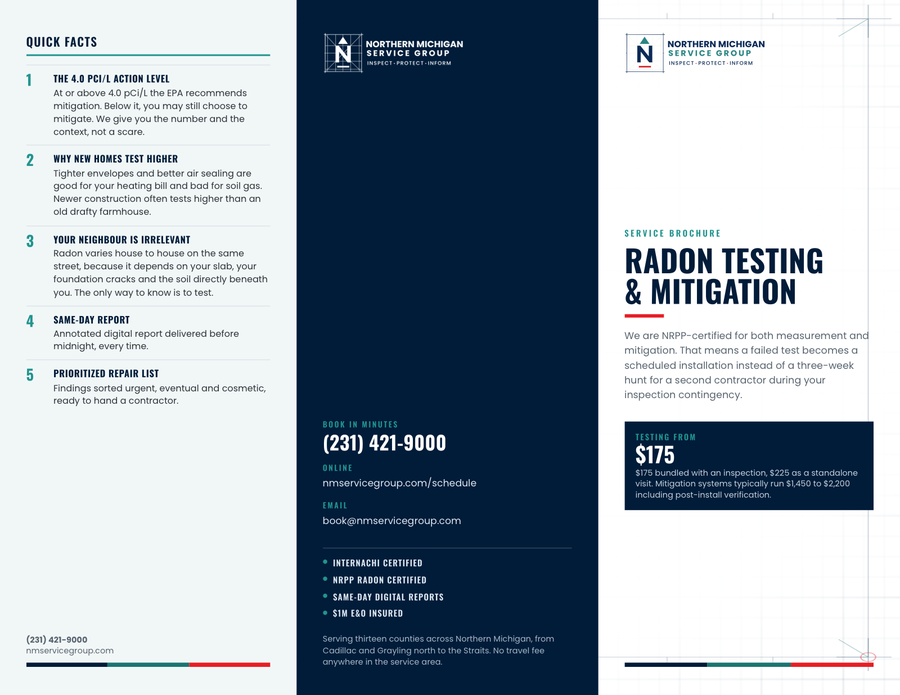
A test measures the radon concentration in your home air over 48 hours. A mitigation system is the physical fix, typically sub-slab depressurization, which uses a sealed pipe and an inline fan to draw soil gas from beneath the foundation and vent it above the roofline before it enters the house. Testing tells you whether you need one.

The EPA recommends testing every two years, and again after any major renovation, foundation work, or change to your heating and ventilation system, all of which change how air moves through the house. If you have an existing mitigation system, test it every two years to confirm it is still performing.
Three things, in order. Keep water moving away from the foundation with gutters, downspout extensions and grading. Keep the attic cold and ventilated so ice dams do not form. And keep the crawlspace dry, with a properly sealed vapor barrier. Almost every expensive structural problem we find in Northern Michigan traces back to one of those three.

In this market, usually yes. It lets you fix or price the problems on your own schedule instead of renegotiating under a contingency deadline, and it removes the buyer’s single biggest source of leverage. It also stops the deal-killing surprise—the finding nobody saw coming three days before closing.

Yes, and ideally three: pre-drywall, final walkthrough, and an 11-month warranty inspection just before your builder’s warranty expires. Municipal code inspections confirm minimum compliance. They are not a quality review, and they do not represent your interests.

A test measures the radon concentration in your home air over 48 hours. A mitigation system is the physical fix, typically sub-slab depressurization, which uses a sealed pipe and an inline fan to draw soil gas from beneath the foundation and vent it above the roofline before it enters the house. Testing tells you whether you need one.

Still have a question? Ask us directly.

We answer inspection questions whether or not you ever book with us.

Scroll to Top